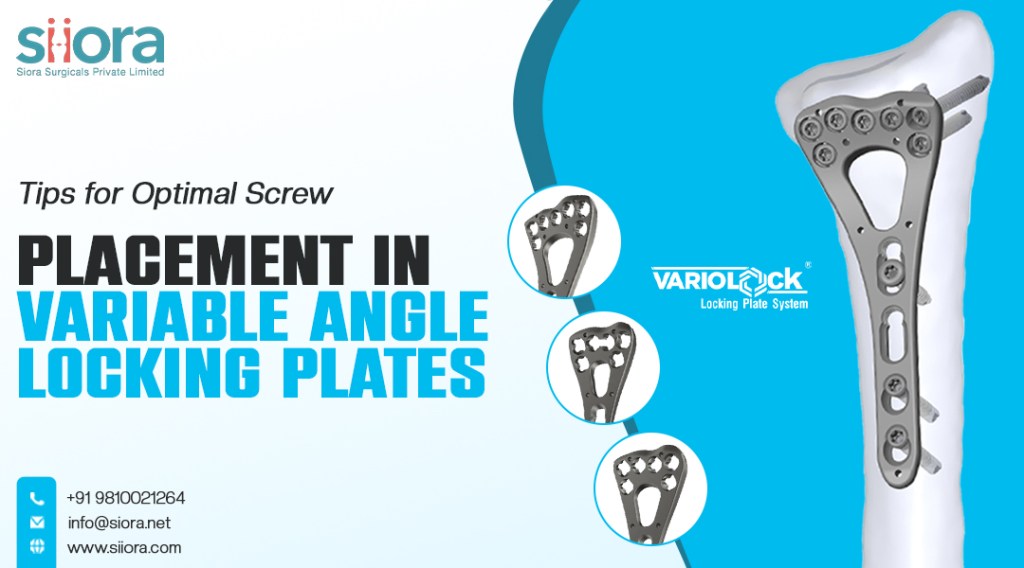
Variable angle locking plates (VALPs) give surgeons real flexibility for fixing tricky fractures, but nailing screw placement is what separates good outcomes from headaches down the line. These plates let screws lock in at up to 15-30 degrees off-axis, which is huge for dodging joints or grabbing solid bone in shattered areas. Get it right, and you cut complications like pullout or irritation; mess it up, and you’re looking at revisions. Here are practical tips straight from the OR trenches to make every screw count.
Start with Solid Pre-Op Planning
Grab good imaging—CT scans beat plain X-rays for mapping fracture lines and bone quality. Visualize your screw paths on 3D recon to spot danger zones like joints or tendons. Mark your plate position on the bone model first; aim for central placement over the fracture to spread loads evenly. Provisional pinning helps hold fragments steady before plating—keeps things from shifting mid-screw.
Pick the Right Drill and Trajectory
Always use the plate’s drill guide—it enforces the angular cone and prevents wobble. Drill at a slight divergence (5-10 degrees) from perpendicular to mimic natural bone paths; this boosts grip in cortical edges. Go slow in osteoporotic bone—feel for chatter-free purchase, and back out if you hit spongy spots. Pro tip: Test angles on a spare plate outside the body to match your planned divergence.
Prioritize Unicortical vs. Bicortical Screws Smartly
Near joints, stick to unicortical screws to avoid piercing cartilage—VALPs hold strong with just one cortex locked. Far from joints, bicortical dives add pullout resistance, especially in comminuted fractures. Alternate them: two unicortical distally, bicortical proximally for balance. In distal radius work, keep volar screws unicortical to spare the dorsal cortex and tendons.
Load Screws in the Right Sequence
Don’t blast all screws at once—start with two or three provisional ones at opposite ends to clamp the plate snug without deforming the bone. Then fill the middle, checking reduction under fluoro each time. This “rafter” technique clamps everything progressively, avoiding gapping. For periarticular plates, lock subchondral screws last—they fine-tune alignment once the shaft is stable.
Watch the Cone and Avoid Over-Angling
The magic of VALPs is that 15-degree cone, but pushing 25+ degrees weakens the lock—threads strip easier under torque. Use the guide’s full stroke to stay inside limits; if it binds, you’re out of bounds. In tibial plateau fixes, angle screws divergently into the posteromedial fragment for anti-slide stability. Fluoro in two planes, religiously—lateral for depth, AP for spread.
Handle Poor Bone Quality Like a Pro
Osteoporosis laughs at fixed paths, so VALPs shine here—hunt dense metaphyseal bone with your cone freedom. Pre-drill smaller (0.5mm under) for tighter fits, or add cement augmentation for salvage cases. Raft screws (multiple short ones fanning subchondral bone) prevent settling in heads or plateaus—space them 5-7mm apart.
Final Checks and Tweaks
After all screws, stress the construct: flex the joint, load the bone gently—no micromotion means success. Count threads engaged—at least four per screw for peak strength. If the trauma implant bugs soft tissue, plan early removal, but good placement keeps it rare (under 5%). Post-op, early motion protects without stressing locks.
Master these tips, and VALPs turn complex fractures into routine wins—faster unions, happier patients, fewer callbacks. Practice on models or cadavers if you’re ramping up; real bone forgives less.
 Siora Surgicals Pvt. Ltd.